Micro-Courses: Benefits, Examples, and How They Support Career Development
October 15, 2026
Introduction
Learning new skills is essential for career growth, but finding time for professional development can be challenging. Working professionals often balance full-time jobs, personal responsibilities, and changing workplace expectations. Traditional courses may require a significant time commitment, making it difficult to learn new skills consistently.
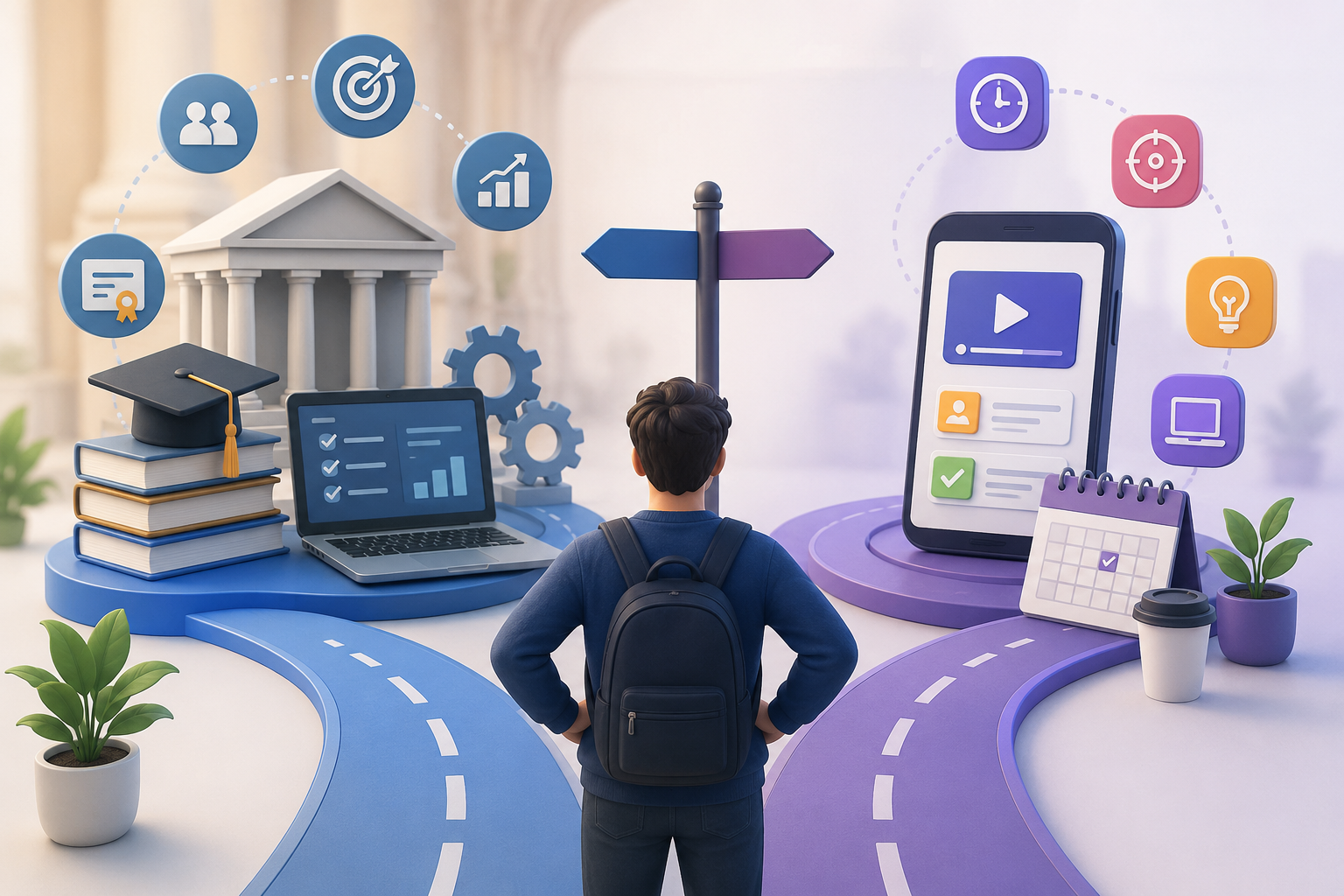
Micro-courses offer a more focused approach to learning. They break a larger subject into smaller, manageable learning experiences that concentrate on a specific skill, concept, or task. Instead of completing a lengthy program before applying what you have learned, you can focus on one learning objective at a time.
Explore WFI's micro-courses to discover focused learning opportunities that can help you develop relevant professional skills.
From artificial intelligence and data analysis to digital marketing and project management, micro-courses can help learners build practical knowledge in areas relevant to their careers. Businesses can also use them to introduce new tools, support employee development, and address specific skills gaps.
In this guide, we explain what micro-courses are, explore their benefits, share practical examples, and discuss how individuals and organizations can choose the right learning opportunities.
What Are Micro-Courses?
Micro-courses are short, focused learning programs designed to teach a specific concept, skill, or task. They generally cover a narrower subject than a traditional course or degree program and aim to help learners make progress toward a clearly defined learning objective.
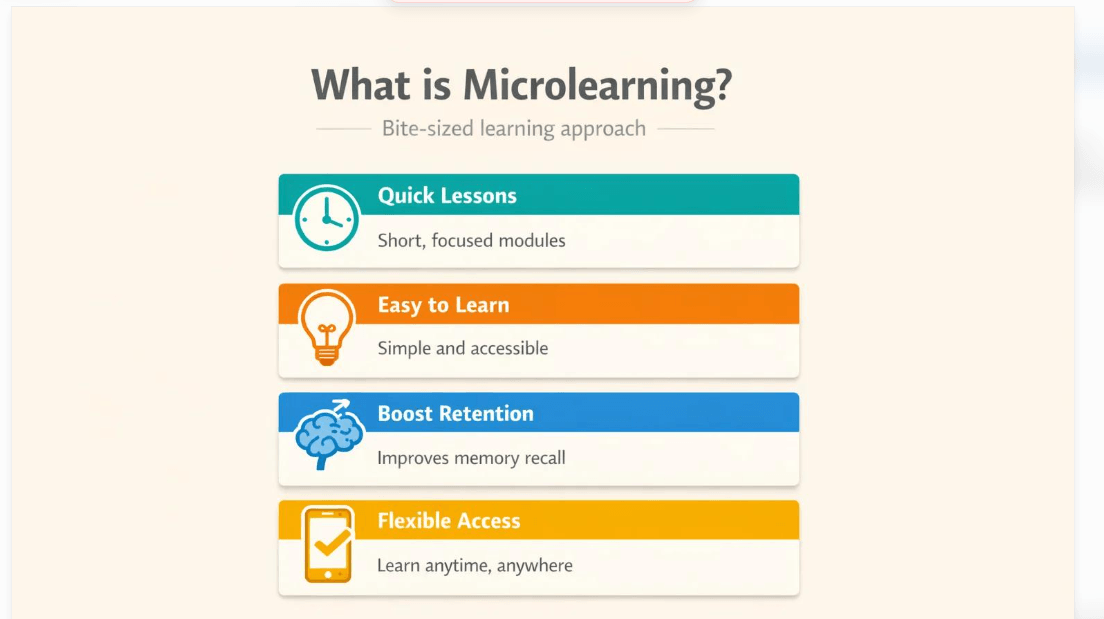
For example, instead of taking a complete digital marketing program, a learner might begin with a short course on keyword research, email campaign optimization, or website analytics. Each topic addresses a particular skill that can be developed and applied independently or as part of a broader learning plan.
Micro-courses may include short video lessons, reading materials, demonstrations, quizzes, practical exercises, or small assessments. Some offer certificates or completion records, while others focus primarily on helping learners acquire a specific capability.
There is no universal duration that defines every micro-course. The length depends on the subject, learning objectives, and level of practice required. The defining feature is the focused scope rather than a fixed number of minutes or hours.
How Do Micro-Courses Work?
A micro-course typically follows a simple learning process:
- Choose a specific objective: Identify the skill or concept you want to learn.
- Study focused material: Work through concise lessons, demonstrations, or examples.
- Practice the skill: Complete an exercise, answer questions, or apply the concept to a realistic task.
- Check your understanding: Use a quiz, assessment, or practical result to identify areas that need improvement.
- Apply what you learned: Use the new skill in a work project, portfolio, or personal learning activity.
This structure makes micro-courses useful for learners who want to make steady progress without committing to a long program immediately.
Micro-Courses vs. Traditional Courses
Micro-courses and traditional courses both support learning, but they serve different purposes. Micro-courses focus on a narrow learning objective, while traditional courses often provide broader coverage and more extensive practice across a subject.
| Feature | Micro-Courses | Traditional Courses |
|---|---|---|
| Learning scope | Focused on a specific skill or topic | Usually covers a broader subject |
| Time commitment | Typically shorter and more focused | Often requires a longer commitment |
| Learning structure | Small, targeted lessons or modules | May include multiple units or subjects |
| Practical application | Can focus on one immediate task | May develop knowledge across several related skills |
| Assessment | May use short quizzes or practical exercises | May include projects, exams, and larger assessments |
| Best suited for | Targeted skill development and knowledge refreshers | Broader learning goals and in-depth subject coverage |
Neither format is automatically better. A micro-course may be suitable when you need to learn a specific tool or technique. A comprehensive course may be more appropriate when you are entering a new profession or need to develop several connected skills.
Many learners benefit from combining both approaches. A broader program can provide the foundation, while micro-courses can help strengthen individual skills over time.
Benefits of Micro-Courses for Professional Development
Micro-courses can make professional development more manageable by dividing learning into smaller steps. Their usefulness depends on the quality of the material, the learner's goals, and opportunities to practice the skills.
1. Flexible Learning
Short, focused lessons can be easier to fit around work and personal responsibilities than a lengthy training commitment. Learners may be able to study during a break, between projects, or at a time that suits their schedules.
However, flexibility depends on the course format. Some programs are self-paced, while others include scheduled sessions or deadlines.
2. Focus on Specific Skills
Micro-courses allow learners to concentrate on a particular capability without studying unrelated material. Someone who already understands the basics of digital marketing, for example, might focus on analytics reporting or search intent rather than repeating an entire introductory program.
This targeted approach can help learners identify and address specific development needs.
3. Opportunities for Practical Application
Learning is more useful when people can apply new knowledge. A well-designed micro-course can include a practical exercise, demonstration, or task that mirrors a real workplace activity.
For example, a learner studying data visualization might create a simple chart from a sample dataset. A digital marketer might practice evaluating search queries or reviewing campaign performance.
4. Support for Continuous Learning
Technology, workplace processes, and industry expectations change over time. Micro-courses can provide a manageable way to refresh existing knowledge or explore a new tool as professional needs evolve.
Completing short courses alone does not guarantee expertise. Learners should combine focused study with practice, feedback, and more comprehensive learning when a subject requires deeper understanding.
5. A More Targeted Learning Plan
Micro-courses can help learners organize development around specific goals. Instead of choosing courses without a clear direction, they can identify a skill gap and select learning activities that address it.
For example, someone preparing for a digital marketing role might focus on keyword research, analytics, content planning, and campaign measurement in a deliberate sequence.
6. Potential Value for Employee Training
Organizations can use micro-courses to introduce employees to new software, explain updated procedures, or reinforce important workplace skills. Short modules may also make it easier to provide targeted refreshers when teams need them.
Businesses should still evaluate whether employees understand and can apply the material. Completion rates alone do not demonstrate that a training program has improved performance.
Examples of Micro-Courses Across Different Industries
Micro-courses can cover a wide range of professional and technical subjects. The following examples illustrate how focused learning can address specific development needs.
1. Artificial Intelligence and Generative AI
AI-related micro-courses can introduce learners to individual concepts or practical tasks without requiring them to study every area of artificial intelligence at once.
Possible topics include:
- Understanding the basics of generative AI
- Writing and evaluating effective prompts
- Using AI tools to summarize information
- Recognizing common limitations of AI-generated content
- Understanding responsible AI use and data privacy
Learners who want to explore the subject further can read WFI's guide to understanding AI model training.
2. Data Analysis and Business Intelligence
Data-focused micro-courses can help learners build individual analytical skills. They may be useful for professionals who work with reports, spreadsheets, dashboards, or business performance data.
Possible topics include:
- Spreadsheet formulas and data cleaning
- Creating basic charts and dashboards
- Understanding descriptive statistics
- Interpreting business performance metrics
- Communicating insights through data visualization
These focused topics can complement broader learning about what an AI data analyst actually does.
3. Digital Marketing
Digital marketing includes several connected disciplines, making it suitable for focused learning modules. A learner can concentrate on one activity before moving to another area of the marketing process.
Possible topics include:
- Keyword research and search intent
- Writing SEO-friendly content
- Understanding website traffic reports
- Planning email marketing campaigns
- Measuring paid advertising performance
- Developing content calendars
For a broader perspective, learners can explore WFI's guide to becoming a digital marketer in 2026.
4. Software Development
Software developers can use focused learning to explore a programming concept, development tool, or testing technique. These modules can be especially helpful when a developer needs to strengthen a particular skill for an existing project.
Possible topics include:
- Fundamentals of a programming language
- Debugging common code errors
- Writing unit tests
- Understanding version control workflows
- Using AI coding assistants responsibly
Learners interested in a more comprehensive technical pathway can review WFI's AI software engineer bootcamp curriculum.
5. Project Management
Project management micro-courses can focus on individual practices that help teams plan, coordinate, and deliver work.
Possible topics include:
- Writing clear project objectives
- Identifying and prioritizing risks
- Creating a basic project schedule
- Managing stakeholder communication
- Using AI tools to organize project information
These topics can support professional development, although complex projects may require broader training and practical experience.
How Businesses Can Use Micro-Courses for Employee Training
Organizations often need to introduce new processes, tools, and workplace expectations while keeping teams productive. Micro-courses can support these efforts by focusing training on specific tasks and knowledge gaps.
Identify Skills Gaps
Begin by identifying what employees need to learn. This might involve a new software platform, updated compliance procedures, customer service techniques, or the introduction of AI tools.
Managers can use employee feedback, performance reviews, workflow observations, and assessments to identify relevant training needs.
Divide Training Into Focused Modules
Instead of presenting every topic in one lengthy session, organize learning around clear objectives. For example, a training program for a new customer relationship management system might include separate modules for entering customer information, managing leads, and generating reports.
Each module should have a defined purpose and give employees an opportunity to practice the relevant task.
Connect Learning to Workplace Tasks
Training is more useful when employees can apply it to their daily responsibilities. Use realistic examples, demonstrations, practice exercises, and job-related scenarios where appropriate.
Employees should also know where to find guidance when they encounter situations that were not covered in the training material.
Measure Training Effectiveness
Businesses should evaluate whether micro-courses improve knowledge and workplace performance. Useful measures may include:
- Assessment results before and after training
- Employee confidence and feedback
- Task completion time
- Frequency of avoidable errors
- Adoption of a new tool or process
- Manager observations of on-the-job performance
Choose measures that match the training objective. A short introductory course may be intended to build awareness, while a technical course may need to demonstrate practical competence.
Combine Micro-Courses With Broader Development
Micro-courses work best when they form part of a coherent learning strategy. They can introduce concepts, reinforce existing knowledge, or provide targeted support alongside mentoring, practical experience, workshops, and longer training programs.
Organizations should avoid treating course completion as a substitute for the experience and supervision required for complex or high-risk work.
How to Choose the Right Micro-Course
Not every short course provides meaningful learning value. Before enrolling, evaluate whether the course matches your goals and offers enough depth for the skill you want to develop.
1. Define Your Learning Goal
Be specific about what you want to achieve. Instead of choosing a course simply because it covers AI or marketing, identify the task you want to perform more effectively.
For example, you might want to build a dashboard, conduct keyword research, or understand the basics of an AI tool.
2. Review the Course Content
Check the syllabus, learning objectives, prerequisites, and expected outcomes. The course should cover the knowledge and practice required for your goal without leaving important gaps.
3. Check the Instructor and Learning Materials
Look for accurate, well-organized content from credible instructors or providers. In technical fields, examples and exercises should reflect current tools and relevant practices.
4. Look for Practical Exercises
Videos and explanations can introduce a topic, but practice helps learners test their understanding. Choose a course that includes exercises, projects, quizzes, or other appropriate ways to apply the material.
5. Understand the Certificate or Credential
Some micro-courses provide certificates of completion. Before enrolling, check what the certificate represents and whether it is recognized by an employer, professional body, or relevant educational institution.
A certificate of completion does not automatically represent professional certification, formal academic credit, or proof of job readiness.
6. Consider the Cost and Time Commitment
Review the total cost, required study time, access period, and any additional expenses. A free course can be useful, but paid training may offer structured instruction, feedback, or assessment that better suits your needs.
7. Plan How You Will Apply the Skill
Before starting, identify a practical way to use the knowledge after completing the course. You might create a small project, improve a work process, build a portfolio example, or practice the skill with a realistic task.
Applying the material helps you determine what you understand and what you still need to learn.
If you're ready to start learning, explore WFI's micro-courses to find learning opportunities that align with your professional development goals.
Limitations of Micro-Courses
Although micro-courses can make learning more focused, they are not the right solution for every objective. Understanding their limitations helps learners and organizations choose the appropriate training format.
Limited Subject Coverage
A short course cannot always provide the depth required for a complex discipline. Learners may need additional courses, supervised practice, or a comprehensive program to develop a complete understanding of a subject.
Insufficient Practice
Some courses emphasize information delivery without giving learners enough opportunities to apply what they have learned. Without practice and feedback, it may be difficult to transfer knowledge to real workplace situations.
Fragmented Learning
Taking unrelated short courses can create gaps in understanding. Learners should organize their study around a broader objective and make sure individual modules build toward that goal.
Variable Quality
Course length does not determine educational quality. Learners should review the content, instructor expertise, practical activities, and assessment methods before committing their time or money.
Certificates May Have Limited Recognition
Not every micro-course certificate carries the same value. Employers may prioritize practical skills, relevant experience, recognized qualifications, or demonstrable project work over a certificate alone.
The best approach is to select learning opportunities based on the capabilities you need to develop, not simply the number of courses you can complete.
Frequently Asked Questions About Micro-Courses
1. What is a micro-course?
A micro-course is a short, focused learning program designed to teach a specific skill, concept, or task. It may include videos, reading materials, quizzes, and practical exercises. Its main purpose is to help learners work toward a clearly defined learning objective.
2. How long does a micro-course take to complete?
There is no universal duration for a micro-course. Some cover a simple concept in a short session, while others require several sessions and practical activities. The appropriate length depends on the subject, learning objectives, and depth of practice required.
3. Are micro-courses worth taking?
Micro-courses can be useful when they address a specific learning need and provide accurate, relevant material. Their value depends on course quality and whether learners can apply the knowledge. They may not replace a comprehensive program when a subject requires extensive study or supervised practice.
4. What is the difference between micro-learning and a micro-course?
Micro-learning is a learning approach that presents information in small, focused units. A micro-course is a structured learning experience organized around a particular topic or objective. A micro-course may use micro-learning techniques, but the terms do not always mean exactly the same thing.
5. Can micro-courses help with career development?
Yes. Micro-courses can help professionals develop targeted skills, explore new topics, and refresh existing knowledge. They are most useful when aligned with career goals and combined with practical experience, feedback, and broader professional development where necessary.
6. Can businesses use micro-courses to train employees?
Yes. Businesses can use micro-courses to introduce new tools, explain procedures, reinforce workplace skills, and support continuous learning. Organizations should measure whether training improves knowledge or job performance rather than relying only on completion rates.
7. Do micro-courses provide certificates?
Some micro-courses provide certificates of completion, while others do not. The recognition and value of a certificate depend on the provider, assessment process, and any relevant accreditation. Learners should confirm what a credential represents before relying on it for professional advancement.
8. Are micro-courses better than traditional courses?
Neither format is universally better. Micro-courses are suited to targeted learning objectives, while traditional courses can provide broader coverage and more extensive practice. The best choice depends on the learner's goals, prior knowledge, and the complexity of the subject.
Conclusion
Micro-courses provide a focused way to learn specific skills without committing immediately to a lengthy training program. They can support professional development in areas such as AI, data analysis, digital marketing, software development, and project management.
For individuals, micro-courses can help address specific skill gaps, explore new subjects, and build a structured approach to continuous learning. For businesses, they can support employee training when modules are connected to real workplace needs and evaluated against meaningful outcomes.
However, short courses are not a substitute for every form of education. Complex skills often require deeper study, hands-on practice, feedback, and experience. The most effective learning plan combines focused modules with broader development opportunities when needed.
Before choosing a micro-course, define your objective, review the content, check for practical exercises, and plan how you will apply the skill. A focused learning experience becomes more valuable when it contributes to a clear professional or organizational goal.
October 15, 2026
Related Posts